Book review 14: Blame Me On History William “Bloke” Modisane

Book review 13: Sandi Sijake Fighting for my Country: The Testimony of a Freedom Fighter
June 17, 2026
Book review 15: Finding Purpose: Lessons From the Message Architect Thami Nkadimeng
July 13, 2026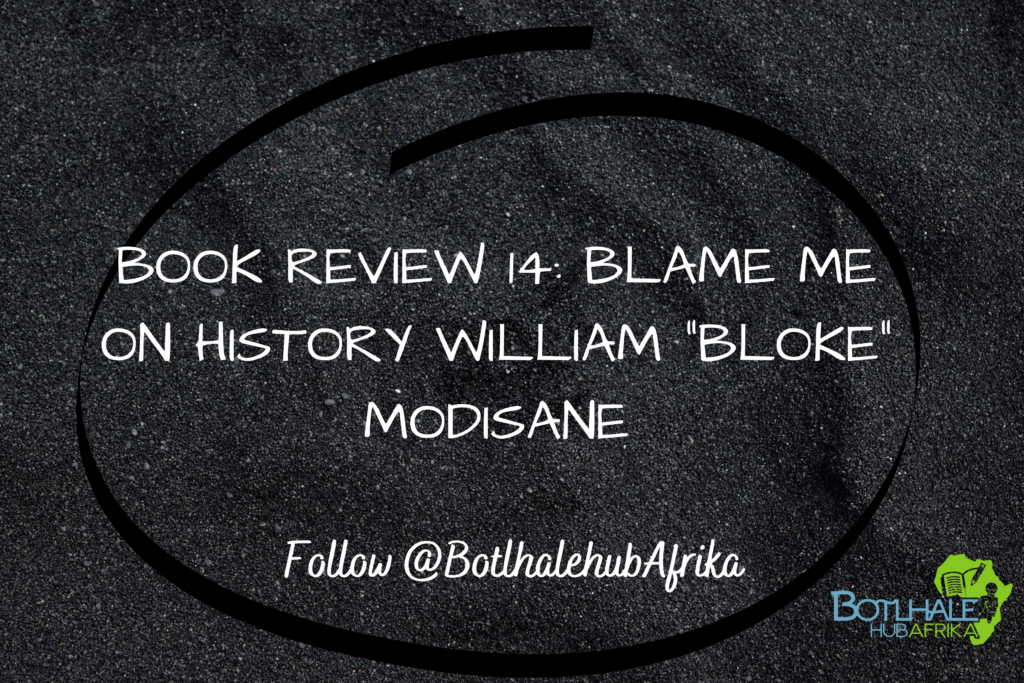
The year was 2020. I was doom-scrolling on Twitter formerly known as X, when I came across an intriguing article about Ugandan activist and author Stella Nyanzi. The article reported that she had been arrested for insulting Ugandan President through a poem she had posted on Facebook. From the very day of her arrest until today, I have continued to follow her work.
Six years later, I found myself at an Exclusive Book store searching for my fourteenth book when a bookseller by the name of Philip pointed me towards William “Bloke” Modisane’s Blame Me on History book. He immediately remarked, “this is a banned book”. Instantly, I thought of Stella Nyanzi.
Under South Africa’s apartheid government, restrictive legislation frameworks were used to suppress intellectual freedom and limit access to information. This meant that differing opinions and freedom of expression were systematically censored. To enforce this censorship, the Apartheid state relied on mechanisms such as the Jacobsen Index.
The Jacobsen index, an unofficial loose-leafed publication, listed banned printed material in accordance with notices published in the Government Gazette. Librarians and booksellers used it to ensure that prohibited materials never made it to their bookshelves. According to historical records, more than 26000 publications were banned during apartheid.
Banning books was a system designed to suppress the free flow of information while protecting distorted narratives about colonialism and apartheid. The state was deeply concerned with controlling how South Africa was perceived, both domestically and internationally. Literature became a battleground where ideas were silenced and voices erased.
Recovering these banned books is therefore an act of reclaiming knowledge and restoring histories that were almost lost.
Bloke Modisane’s memoir demonstrates precisely why banned books deserve to be read.
Reading Blame Me on History left me with mixed emotions. I was not prepared for Bloke’s authenticity and brutal honesty. His writing is emotionally confronting because it forces readers to wrestle with a difficult question: how does one recover from a lifetime of oppression? Can someone living in constant survival mode even recognise that they are merely surviving rather than truly living?
The title itself provides the answer.
Blame Me on History.
Blame the historical conditions that shaped his thinking.
Blame the oppressive legislation that declared him unworthy of dignity and equal opportunity.
Blame the laws that determined where he could live, work or move.
At first, I interpreted Bloke’s writing as an expression of anger and resentment.
However, as I progressed through the book, I came to understand something deeper. His words were not simply born out of hatred, they were born out of profound pain. He was a man deeply wounded by systematic oppression and by the daily degradation inflicted upon Black South Africans.
He challenged an unjust system, resisted the dehumanisation imposed upon and chose exile in the belief that advocating for South Africa from abroad could strengthen the struggle for freedom. Although he wrestled with feelings of guilt for leaving his people behind, his courage lay not only in his activism but also in documenting his lived experiences with remarkable honesty.
Bloke Modisane reminds us that history is not merely a collection of dates and events, it is lived experience. His memoir challenges us to confront the emotional and psychological costs of apartheid, many of which continue to shape South African society today.
Bloke as you rest, thank you for your authenticity, your courage and unwavering honesty.
I highly recommend this book to anyone interested in South Africa’s liberation history, censorship, literature and the enduring impact of apartheid.
Book 14 of 2026
Evocative read.
Phiwe Mncwabe is a Communications & Public Engagement Writer, Pan-African storyteller and Founder of Botlhale Hub Afrika. She writes on governance, leadership, public policy and African affairs through research-informed storytelling that encourages thoughtful public dialogue.
More stories–https://botlhaleafrika.co.za/
Instagram– Phiwe_ Mncwabe
Tik Tok- PhiweMncwabe
Twitter– Phiwe_ Mncwabe_
LinkedIn– Phiwe Mncwabe
No Facebook account
I am not affiliated to any political party. I am affiliated to the Africans.
The views that I share are mine and not affiliated to any employer. These views are not meant to bring harm.
Let’s talk about Africa. Which African country must I visit next?
Read Africa. Write about Africa. Put Africa first!